


The famed London Stone made a quite unexpected appearance in the second season of Netflix’s hit gangster series The Gentlemen:
As a consequence, what better time to revisit an investigation of mine on the Stone from a while back - and its supposed relationship to the very real ‘Curse of Brexit’.
This particular saying about the London Stone saying first appeared in print in an article for Notes and Queries in 1862:
‘So long as the Stone of Brutus is safe, so long shall London flourish’
May 2016: the stone is removed. This is the first time London Stone has left the Cannon Street area in recorded history.
June 2016: one month later, the country votes to leave the European Union. Brexit.
Its (albeit temporary) relocation was followed immediately by the ‘Curse of Brexit’ that continues to threaten London and the UK’s future to this very day.
The supernatural root of economic and social woes?
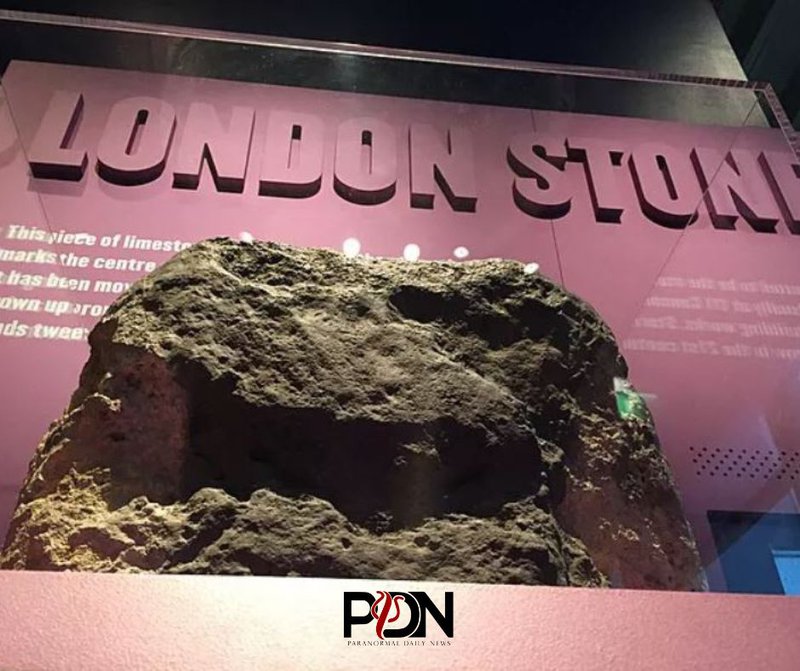
Matt Brown, CC BY 2.0, via Wikimedia CommonsBut what is The London Stone?
Thing is, no-one really knows - is it a prehistoric boundary marker, druidic altar, Roman milestones/part of a temple, Brutus’s (mythic Trojan ruler of Britain, hence the name) foundation stone for the City, a ley line nexus, King Lud’s first London building block, where Merlin stuck Excalibur, or London’s ‘magical heart’, a ‘fetish stone’ which was erected by the first inhabitants there?
Whatever it is, the Stone held great significance for centuries to many, until, that is, I first saw it, neglected and obscured by clothing in a rather rundown Sportex sports shop that occupied the site, since closed.
What people have said about the London Stone
John Snow first published his Survey of London in 1598:
On the south side of this high street, near unto the channel is pitched upright a great stone called London stone, fixed in the ground very deep, fastened with bars of iron, and otherwise so strongly set, that if Carts do run against it through negligence, the wheels be broken, and the stone it self unshaken.
Also:
Now is Mortimer (Cade) lord of this city. And here, sitting
upon London Stone, I charge and command
that, of the city’s cost, the Pissing Conduit run
nothing but claret wine this first year of our reign.
And now henceforward it shall be treason for any
that calls me other than Lord Mortimer.
Henry VI, Part 2 (1594) by William Shakespeare:
Where Albion slept beneath the Fatal Tree,
And the Druids’ golden Knife
Rioted in human gore, In Offerings of Human Life…
They groan’d aloud on London Stone,
They groan’d aloud on Tyburn’s Brook…
William Blake (1757-1827):
An Object, or Monument, of Heathen Worship
John Strype in his 1720 updated edition of John Stow’s Survey of London:
It seems preserved like the Palladium of the city…
Thomas Pennant in his History of London published in the 1790s:
In early Aryan days, when a village was first established, a stone was set up. To this stone, the head man of the village made an offering once a year.
Folklorist George Laurence Gomme in the late 19th century:
Sir Christopher Wren was of opinion that ‘by reason of its large foundation, it was rather some more considerable monument in the Forum; for, in the adjoining ground to the south, upon digging for cellars after the Great Fire, were discovered some tessellated pavements, and other extensive, and other remains of Roman workmanship and buildings.
Walter Besant in his 1910 book on the City of London:
The Mediaeval Kings after their coronations used to strike London Stone with their swords in token of the City’s submission. It was an object of great antiquity when the Romans arrived and their predecessors the ancient Britons found it on their arrival more than two thousand years before. It was erected by the people of the New Stone Age .
George Byron Gordon’s Rambles in Old London (1924).
The London Stone in fiction
In Peter Ackroyd's The House of Doctor Dee (1993), Dr Dee, (based upon the historical figure of the Elizabethan occultist John Dee), says that The London Stone is the last remaining part above the surface of the ancient buried city of London. China Miéville's Kraken (2010), says it is the beating heart of London and the sports shop that housed it hid the command centre of the ‘Londonmancers’. The London Stone also features as the embodiment of evil in Charlie Fletcher's kids trilogy Stoneheart (2006–2008).
DC Comics John Constantine's best friend/sidekick, cockney taxi driver, is slow-witted Chas Chandler, who encounters the Stone in Hellblazer Presents: Chas – The Knowledge (2008).
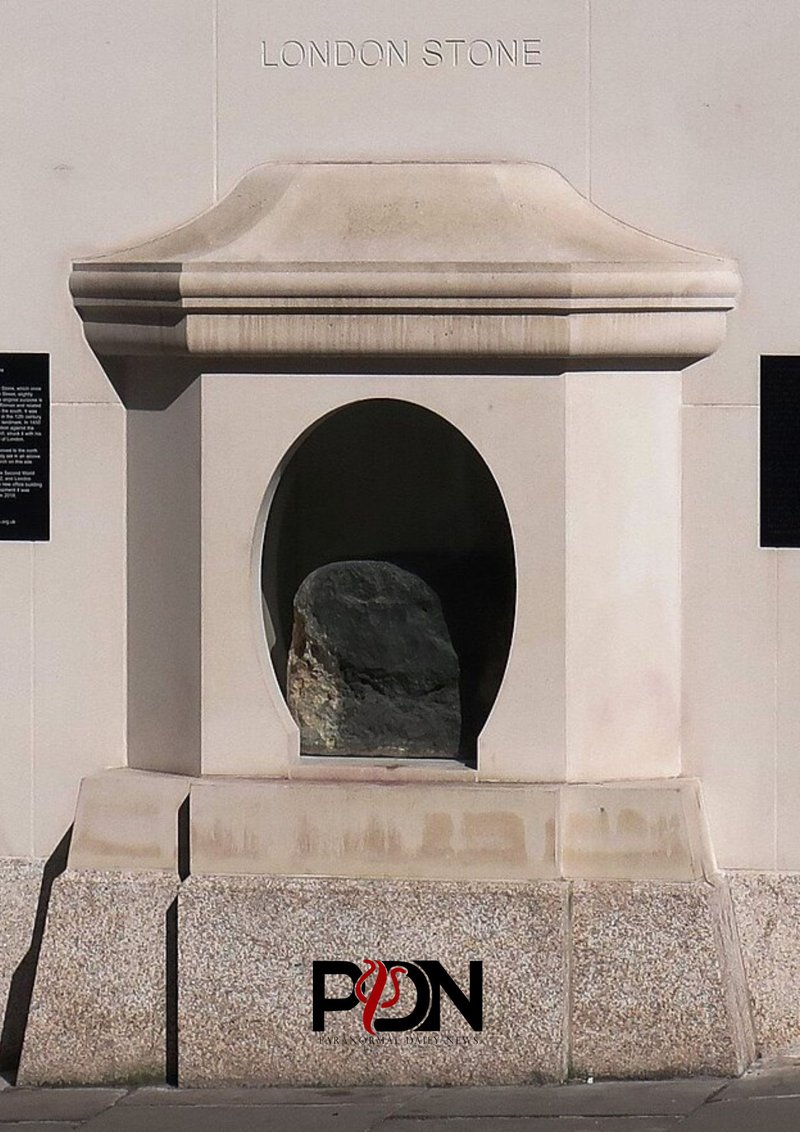
GrindtXX, CC BY-SA 4.0, via Wikimedia CommonsThe plaque next to the Cannon Street London Stone reads:
The remaining part of London Stone, which once stood in the middle of Cannon Street, slightly west of its present location. Its original purpose is unknown, although it may be Roman and related to Roman buildings that lay to the south. It was already called 'London Stone' in the 12th century and became an important city landmark. In 1450 Jack Cade, leader of the rebellion against the corrupt government of Henry VI, struck it with his sword and claimed to be Lord of London.
In 1742, London Stone was moved to the north side of the street and eventually set in an alcove in the wall of St. Swithin's church on this site.
The church was bombed in the Second World War and demolished in 1961–2, and London Stone was incorporated into a new office building on the site. Following redevelopment, it was placed in its present location in 2018.
On the factual side, The London Stone is an irregular block of oolitic limestone measuring 53 × 43 × 30 cm (21 × 17 × 12"), brought from Dorset, the Cotswolds or the north side of the Chilterns - a remnant of a once much bigger object that had stood for many centuries on the south side of Cannon street. The name ‘London Stone’ itself was first recorded around the year 1100, but probably dates from when King Alfred re-established London in 886, after Viking attacks had destroyed the original Saxon town, when it received its singular name – ‘Lundene Stane’ in Old English.
London’s other ancient stones
Two other stones of interest in London include The Weald Stone outside a curry house in Harrow, and rather more grandly, The King’s Stone of Kingston, where tradition/local folklore posits this stone was used during the coronation of Seven Saxon Kings from 900–979 AD (Edward the Elder, son of Alfred the Great (900), Athelstan (925), Edmund (940), Edred (946), Edwy (956), Edward the Martyr (975), and Ethelred II (979).
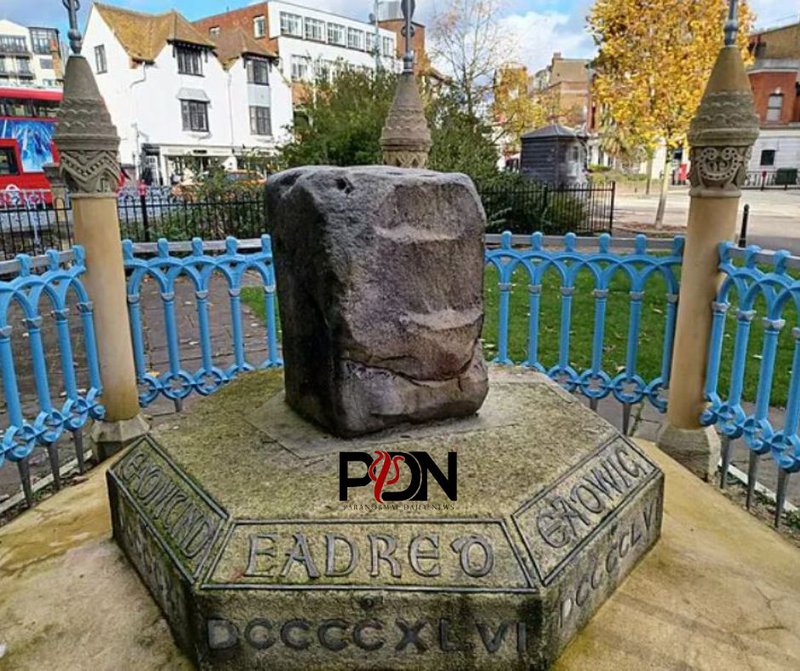
Simon Burchell, CC BY-SA 4.0, via Wikimedia CommonsA rich banker’s knick-knack?
And finally, a 1st century AD Roman survival in Clapham (South London) that attracts little attention, but perhaps should. The Latin inscribed plinth declares, ‘to the spirits of the departed and to Vitus Licinius Ascanius, he made this for himself in his own lifetime’. It was conjectured the monument had been found as Roman spoila in The Tower of London before its journey South of the River as a rich banker’s knick-knack.
Oh, I almost forgot, back to Brutus, the descendant of Aeneas that founded Britain, his first supposed footfall on English soil - Devon’s Totnes; his hardly breathtaking Stone.
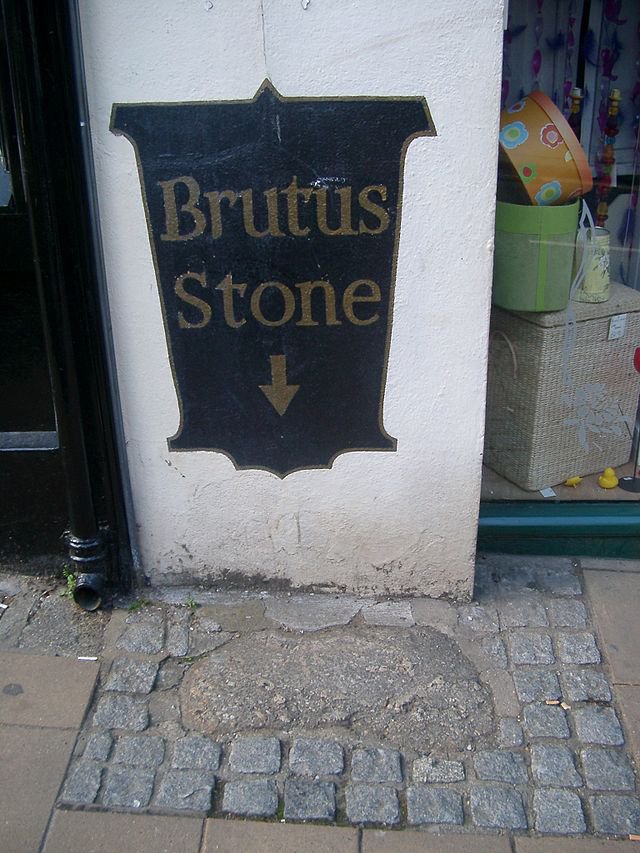
myself, CC BY-SA 3.0, via Wikimedia CommonsStephen Arnell’s novel THE GREAT ONE is now available on Amazon Kindle:
Image Attribution: Article Header
Wonderful London (1927) 09 – St Swithin London Stone
Donald McLeish, CC0, via Wikimedia CommonsReferences
Mysterious stone said to protect London - https://www.thesun.co.uk/tech/9738201/london-stone-cannon-street-mystery/
ancientorigins.net
ramblinglondontours.com
visittotnes.co.uk
londonist.com

